The ABC of gender equality in education

The ABC of Gender Equality in Education: Aptitude, Behaviour, Confidence tries to determine why 15-year-old boys are more likely than girls, on average, to fail to attain a baseline level of proficiency in reading, mathematics and science, and why high-performing 15-year-old girls still underachieve in areas such as mathematics, science and problem solving when compared to highperforming boys. In 2012, 14% of boys and 9% of girls surveyed by the PISA exercise did not attain the PISA baseline level of proficiency in any of the three core subjects.
Initial reflections on ‘Accountability in education: Meeting our commitments’

The new Global Education Monitoring Report is ground-breaking in placing accountability at the centre of its attention. As the report notes, the concept of accountability was shockingly absent from the framing of the Sustainable Development Goals–making it relatively easy for heads of state to sign up to them, as they could be confident that there were few consequences if they failed to deliver.

Date: 
24 تشرين اﻷول (أكتوبر) 2017

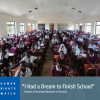
Bridge vs Reality: A study of Bridge International Academies' for-profit schooling in Kenya

Bridge International Academies (BIA) is a large and expanding business that provides for-profit  private  education  in  Kenya,  Uganda,  Nigeria  and  India.  With  support  and  investment coming from global edubusiness Pearson, the World Bank, the UK Department for International Development (DFID) and high profile actors such as Mark Zuckerberg and the Gates Foundation, the claims that BIA makes regarding its services are impressive, portraying the company as providing a magic bullet solution to educational inequalities and a high quality alternative to insufficient and inadequate govern

Out in the open: Education sector responses to violence based on sexual orientation and gender identity/expression

Violence in schools and other educational settings is a worldwide problem. Students who are perceived not to conform to prevailing sexual and gender norms, including those who are lesbian, gay, bisexual or transgender (LGBT), are more vulnerable. Violence based on sexual orientation and gender identity/expression, also referred to as homophobic and transphobic violence, is a form of school-related gender-based violence.

الصفحات