A Policy Audit of the National Education Budget (Bangladesh)
The report highlights allocation for education sector of different fiscal years aiming to underline priority areas for realising National Education Policy-2010, explains the trends of education financing, analyses the allocation in development and non-development programmes and finds the challenges in implementing the strategic priorities of education sector in Bangladesh.
Confronting the Contradictions: the IMF, wage bill caps and the case for teachers
The International Monetary Fund (IMF) restrictions on recurrent government spending are working against the MDGs, and Education for All, this report argues. Through research with the governments of Malawi, Mozambique and Sierra Leone, this study shows that IMF-imposed macroeconomic policies and explicit caps on teachers’ wage bills have forced many poor countries to freeze or curtail teacher recruitment, and are a major factor behind the chronic and severe shortage of teachers.
Making the Budget Work for Education: Experiences, achievements and lessons from civil society budget work
This report explores a range of innovative education budget work initiatives from Bangladesh, Ghana, Kenya, Malawi and Uganda, where civil society has monitored and challenged their governments over education expenditure in order to hold themaccountable for commitments to EFA and the MDGs.
Global Corruption Report: Education
Corruption and poor governance are acknowledged as major impediments to realising the right to education and to reaching global development goals. Corruption not only distorts access to education, but affects the quality of education and the reliability of research findings. From corruption in the procurement of school resources and nepotism in the hiring of teachers, to the buying and selling of academic titles and the skewing of research results, major corruption risks can be identified at every level of the education and research systems.
Enseignement primaire et gratuité
L’accès à un enseignement primaire universel et gratuit constitue une des principales composantes du droit à l’éducation et des aspects juridiques liés à ce droit fondamental.
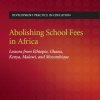
Abolishing School Fees in Africa: Lessons from Ethiopia, Ghana, Kenya, Malawi and Mozambique
Abolishing School Fees in Africa is the product of a SFAI workshop, “School Fee Abolition: Building on What We Know and Defining Sustained Support,” held in Kenya in 2006. The book begins with a comparative overview of the processes, challenges, and lessons learned by five countries that had already abolished school fees: Ethiopia, Ghana, Kenya, Malawi, and Mozambique. The subsequent chapters delineate the actual experiences of each of the countries in planning and implementing their policies.
The State of the Right to Education Worldwide. Free or Fee: 2006 Global Report
This report summarizes in 281 pages the shortcomings of global educational promises and then examines how the right to education fares in 170 countries. Developing and transitioning countries are divided into six geographical regions and 31 tables highlight the key findings derived from country-by-country surveys. The Report highlights the abyss between the domestic policies of wealthy creditor and donor governments which keep compulsory education free, and their external policies which have made it for-fee. All sources are indicated in 1,317 footnotes.
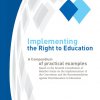
Implementing the Right to Education: A Compendium of Practical Examples
This publication is a compilation of practical examples of measures taken by Member States in implementing the provisions of the Convention and the Recommendation against Discrimination in Education. It has seven chapters reflecting the main issues and components including in the Convention and Recommendation. It begins by presenting the legal framework adopted by States.
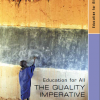
EFA Global Monitoring Report 2005: Education for All – The Quality Imperative
As many governments strive to expand basic education, they alsoface the challenge of ensuring that students stay in school long enough to acquire the knowledge they need to cope in a rapidly changing world.Assessments show that this is not happening in many countries. This Report reviews research evidence on the multiple factors that determine quality, and maps out key policies for improving the teaching and learning process, especially in low-income countries.