Rapport de la rencontre francophone sur la marchandisation et la privatisation de l’éducation, Dakar, 23-26 October 2017

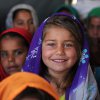
Du 23 au 26 octobre s’est tenue la deuxième Rencontre francophone sur la marchandisation et la privatisation de l’éducation à l’Institut de la Francophonie pour l’Éducation et la Formation à Dakar. Cet événement a réuni 107 délégués issus de 25 pays.

Analysis of support to private sector engagement in global partnership for education recipient countries

This report provides an analysis of support to private sector engagement in Global Partnership for Education (GPE) recipient countries, building off a prior study focusing on GPE decision-making on private schooling. This review includes an analysis of 101 documents relating to the 40 GPE recipient partner countries with active Education Sector Program Implementation Grants (ESPIGs). Country profiles of Haiti, Pakistan, and Uganda are provided in an Appendix, each of which highlights important trends with implications for GPE support to private participation in education.

Education Under Attack 2018

In countries across the globe from Afghanistan to Colombia to India to Mali to Turkey to Yemen and on, students, teachers, and educational facilities are under siege. Targeted killings, rape, abduction, child recruitment, intimidation, threats, military occupation, and destruction of property are just some of the ways in which education is being attacked.

“When I picture my future, I see nothing”. Barriers to education for Syrian refugee children in Turkey

This report is the first of a three-part series addressing the urgent issue of access to education for Syrian refugee schoolchildren in Turkey, Jordan, and Lebanon. The series will examine the various barriers preventing Syrian children from accessing education and call on host governments, international donors, and implementing partners to mitigate their impact in order to prevent a lost generation of Syrian children.

“I Would Like to Go to School”. Barriers to education for children with disabilities in Lebanon. Summary

Under the law, all Lebanese children should have access to education free from discrimination. Lebanon’s Law 220 of 2000 grants persons with disabilities the right to education, health, and other basic rights. It set up a committee dedicated to optimizing conditions for children registered as having a disability to participate in all classes and tests.

Growing up without an education: barriers to education for Syrian refugee children in Lebanon

In Lebanon—a country of around 4.5 million citizens—almost one in four people today is a refugee. Since the start of the Syria conflict in 2011, 1.1 million Syrians have registered with the United Nations High Commissioner for Refugees (UNHCR); the Lebanese Government puts the total number at 1.5 million.

How to measure equity in education

The new Handbook on Measuring Equity in Education, produced by the UNESCO Institute for Statistics (UIS), the FHI 360 Education Policy Data Centre, Oxford Policy Management and the Research for Equitable Access and Learning (REAL) Centre at the University of Cambridge, provides practical guidance on the calculation and interpretation of indicators designed to target the most disadvantaged groups. It is intended for anyone involved in the measurement and monitoring of equity in education, especially those concerned with national policymaking.

Her Turn. It's time to make refugee girls' education a priority

“Her Turn”, a new report from UNHCR, the UN Refugee Agency, reveals that refugee girls at secondary level are only half as likely to enrol in school as their male peers, even though girls make up half of the school-age refugee population. 

Access to education is a fundamental human right. Yet, for millions of women and girls among the world’s growing refugee population, education remains an aspiration, not a reality.

Rapport GEM 2018 sur le genre

Le Résumé sur l’égalité des genres 2018, sixième édition, élaboré par l’équipe du Rapport mondial de suivi sur l’éducation, dresse le constat qu’il ne suffit pas de s’intéresser à la parité dans les taux de scolarisation, domaine dans lequel des progrès considérables sont actuellement accomplis, car l’inégalité des genres revêt beaucoup d’autres formes. Notre cadre de suivi et nos mécanismes de collecte de données doivent être plus précis afin de révéler d’autres manifestations de l’inégalité des genres dans l’éducation.

Pages